Showing posts with label Australian Skeptics. Show all posts

Wednesday, November 4, 2015

September - October 2015 Updates


The GSoW tour of Australia, Hong Kong and Dongguan, China is all over. What a blast meeting people, so many of you have been following the project and are big fans of the work we are doing. Thank you for your kind words and support. If you are interested, I have managed to upload lots of video and photos from that trip.  I lectured about GSoW to eight different skeptic groups and have several of these also uploaded.  

We at GSoW are working on some changes for 2016, as we are a all-volunteer group these things take time and will eventually get done, just as time permits.  We hope to roll out a new project soon  called Stat Badger and is made possible by friend of GSoW, Kyle Polich. If you are a fan of statistics you should check out his podcast Data Skeptic. 

Also coming January 2016 the GSoW focus is going to be on creating/rewriting Wikipedia pages for skeptical books. We have a list with over 500 listed on it, only about 10 percent have Wikipedia pages and of those 50 most pages aren't in good condition. We are aiming for GSoW to complete 100 Wikipedia pages, 20 to become Did You Know's.

We are also looking into making GSoW into a non-profit.  This will make it easier for us to receive donations that we can use for outreach. Our audience is the skeptical community, so we need to be present at conferences.  Travel and expenses related to conference attendance can get expensive. 


There are lots of awesomeness below for you to enjoy, please check out the before and afters. Share this blog and leave us comments.  And thank you for being here for us.

-Susan


=======================

FROM LEON

Dutch Team
Stichting Skepsis updates. The Dutch skeptics foundation, Stichting Skepsis, has been revamping their website. Leon Korteweg checked and corrected whether URLs from Wikipedia to Skepsis.nl still worked. Some WP articles needed no update at all (yet), others just a better referencing format and/or a new URL here and there, and a few are in such a bad shape in general that he had to go and edit them properly. Although most link from the Dutch Wikipedia, some subjects are addressed on English                                                                       Wikipedia as well (see English Team).

Some basic macrobiotic ingredients. Nelissen and
others claimed simply eating 'right' could prevent or
cure any illness. Not so in at least 4 lethal cases.
KVDP CC-BY-SA 3.0. 

– Adelbert Nelissen - 
Before & After - A Dutch macrobiotics quack who was (partly) responsible for the death of at least 4 people. He recommended far-fetched pseudoscientific diets to 'get yin and yang balanced' or something, and vehemently dissuaded patients from seeking help from the "medical and nutritional establishment", because doctors will perform any surgery without permission if it makes them money (classic 'Big Pharma' conspiracy theories).

I read the really sad story about a man (formerly a well-known politician) whose wife became one of the victims, because she was too afraid to do simple surgery to prevent cervical cancer. Instead, she preferred all kinds of expensive woo woo diets and treatments on Nelissen's advice, wasting valuable time and money. The husband tried everything to persuade her, but didn't want to violate her free choice and physical integrity. They ended up divorced and she died. His story sent a shock through the country in 1998, and other victims came forward. Together they sued Nelissen, who was eventually convicted.

Most of Nelissen's WP page was rather promotional of him, almost hagiographic. It said stuff like 'Using cooking lessons and his inspiring lectures, he inspired many to [lead] a more healthy lifestyle. With his direct, intelligent and investigative approach, he challenged many dogmas of established medical and nutritional science'. I changed it to 'Using cooking lessons and his lectures, he encouraged many to [lead] a different lifestyle. With his direct and investigative approach, he challenged much of the knowledge of regular medical and nutritional science', which I think is much more neutral.
– Masaru Emoto - Before & After - The Japanese pseudoscientist who claims to have proven water has memory and has a healing effect on people. He was already categorised as a "pseudoscientist", but I added Rob Nanninga and Gerrie Croonen saying that as well in the 'skepticism' section. I added an extra Skepsis article, and asked for sources for several more claims, including an unsourced counter-claim by scientists.
Rob Nanninga demonstrates how Rostelli's 'telekinesis'
stunt is a simple physics trick (2001).

– Rasti Rostelli 
- Before & After - Improved the criticism section with an exposé and TV show episode (21:28) wherein Rob Nanninga exposes the tricks Rostelli used in his performances, which he dishonestly calls 'mere suggestion' when it's a real chemical reaction or 'telekinesis' when it's just a simple magician's physics trick. Also, Rostelli doesn't warn that some of his tricks are actually dangerous, nor does he take care of harm done to participants afterwards.

– Rob Nanninga 
- Before & After - Included the Rostelli exposure, see above.


– Alfred Vogel - Before & After - The Swiss homeopath whose 'flagship' product 'Echinaforce' appears to be completely ineffective. There was already a criticism section, but it was a bit out of order. Also added Arjen Lubach's satire.


– Echinaforce - Before & After - Basically the same addition as with Alfred Vogel under the 'Ontdekking' section.


Good Thinking Society investigates Peter Popoff: Michael Marshall and a colleague show how Popoff persuades people to send him money for empty promises and near-worthless trinkets in return, and how a stage 'healing' was probably faked.

– Good Thinking Society - Before & After.

– Peter Popoff - Before & After - There was barely any information on Dutch Wikipedia so far; we doubled the contents.


Al Seckel (1958–2015).
Joi Ito CC-BY-SA 2.0.
Al Seckel - Before & After - Assessment of apparent date of death by Leon Korteweg. There is still much uncertainty on this point.

Paul Verhaeghe - Before & After - Criticism against his psychoanalytical views were presented as a 'conspiracy' amongst a group of philosophers and journalists, as if he was being persecuted. In fact, just a handful of 
individual philosophers and one journalist criticised his views separately, there was no coordinated 'attack'. The skeptics were not properly mentioned by name, nor their critical articles referenced. (Ironically, the psychoanalysts later published a collective manifesto against the 'scientistic' skeptics themselves, doing exactly what Verhaeghe's page falsely accused their opponents of doing).


English Team

Australian Skeptics Inc. CC-BY-SA 4.0.

Parapsychology research at SRI - rewrite by April Poff - Before & After

Australian Skeptics - Grand rewrite by Michelle Franklin - Before & After. Michelle did major improvements to the article, which was then presented by Susan Gerbic at the Australian Skeptics National Convention in October 2015.


Louis Fles - rewrite by April Poff, reviewed by Leon Korteweg. Featured as a Did You Know? on 28 October 2015. - Before & After
Deborah Hyde at QED 2014.Andrew Merritt CC-BY-SA 3.0.

Franklin House (Launceston) page rewritten while at the Launceston Workshop - Before & After

Deborah Hyde - Brand New Page - created by András Pintér. She is the most prominent skeptical investigator of cryptozoology in the UK, and the editor of The Skeptic.

Launceston Skeptics - Brand New Page - created by Susan Gerbic.

Jon-Erik Beckjord - rewrite by Janyce Boynton - Before & After.
Arjen Lubach. Vera de Kok CC-BY-SA 4.0.

Arjen Lubach - Brand New Page - A Dutch comedian, television presenter and writer, skeptical about religion, homeopathy, the monarchy etc. His Dutch page, earlier expanded by Emile Dingemans and provided a picture and voice intro by Vera de Kok, was translated to English by Leon Korteweg and reviewed by April Poff.

Al Seckel - Before & After - Assessment of apparent date of death by Susan Gerbic, Jerod Lycett and others. There is still much uncertainty on this point. Also added an infobox.

Alfred Vogel - Before & After -  After the improvements on Dutch Wikipedia (see above) Leon Korteweg copypaste-translated the criticism section to English Wikipedia, and debunked the whole Ben Black Elk story in the Travels section. He deleted the appeal to tradition claim that 'The Sioux had known of this plant for generations and used it as an all-round remedy: externally for snakebites, wounds and bruising and internally for strengthening the immune system', which had been challenged since October 2011.


Sue Ion. Rob McDermott CC-BY-SA 4.0.

Good Thinking Society investigates Peter Popoff: see above.
Good Thinking Society - Before & After - See above.
Michael Marshall (skeptic) - Before & After - See above.
Peter Popoff - Before & After - See above.

Sue Ion - rewrite by Janyce Boyton - Before & After

Rob Nanninga - Before & After - See above.

Paul Verhaeghe - Before & After - See above.


Paul Cliteur. Vera de Kok CC-BY-SA 4.0.
Paul Cliteur - Brand New Page - A Dutch Professor of Jurisprudence and Philosophy, he is a well-known critic of religion in general and Islam in particular, and an advocate for atheism, secularism, free speech, animal rights etc. Leon Korteweg recorded his voice intro, improved, expanded and translated his biography, reviewed by April Poff and Janyce Boynton.

German Team


Paul Verhaeghe - Before & After - See above.


Commons
ECSO board meeting in London. András Pintér CC-BY-SA 4.0.

European Skeptics Congress photos and voice intros: Brand New Category. Contributions by András Pintér and Leon Korteweg.
– Amardeo Sarma
– Tim Trachet
– Johan Braeckman
– Deborah Hyde

– Julia Offe
– Klaus Schmeh
– Martin Mahner
– Andrew Copson
– Ian Scott
– Paul De Belder
– Edzard Ernst
– Tomasz Witkowski

– Maciej Zatonski
– And more...
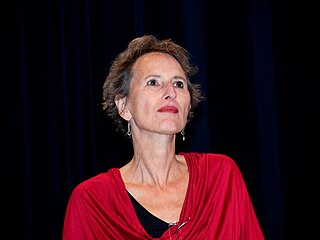
Karin Spaink. René van Elst CC-BY-SA 4.0.

Anton Constandse Lecture 

Photos of Karin Spaink (Freethinker of the Year 2015), Paul Scheffer and a voice intro of Karin Spaink. English before & English after – Dutch before & Dutch after.

Skepsis Congres photos and voice intros: Brand New Category. Contributions by Leon Korteweg.

---------------------------------

We had three Did You Know? articles this time...
Louis Fles


Jim Baggott

Jon Palfreman

---------------------------------

GSoW in the Media

Practical Skepticism Panel from TAM13 - Blog from The Thoughtful Conduit

Skeptic Zone - Maynard interviews Susan Gerbic at the Sydney SitP 28:33

Saltklypa - Norwegian podcast with a segment in English, interview with Mark Edward who talks about the GSoW project 30:00 +/-

Hopes&Fears Magazine - Hoax Busters Article

Reality Check Podcast - Interview with Susan Gerbic about GSoW

Skepticality - Interview with GSoW editor April Poff

Skepticality - Interview with GSoW Hungarian Team Leader  András Pintér

Susan and David Young are interviewed on a Hong Kong radio show about GSoW and more

Susan Gerbic's lecture on GSoW for Atheist United 
---------------------------------

Please check out our YouTube channel 
and write to us at GSoWteam@gmail.com

Friday, October 16, 2015

Australian Skeptic Convention 2015 Show Notes

Hello All

These are the notes from the GSoW lecture given on October 17, 2015. Here you will find the examples given on screen and even more goodies.  Enjoy and Share


------------------------------

Australian Skeptics - rewrite by Michelle Franklin - Before & After

Amanda Bauer - Greg Neilson - Brand New Page 

Friends Of Science In Medicine - Christine Daley - Before & After

Rachael Dunlop new page (with audio) written by new editor Sean Whitcomb. Rachael was also featured on the front page of English Wikipedia as a Did You Know... Here are the stat views during that day.

Maynard - Greg Neilson - Before & After


This is the before and after for Sherri Tenpenny.  The work on this page was completed by Susan Gerbic and two non-GSoW skeptics, Joe Alabaster and Phil Kent.  

Stephanie Messenger (Brand New Page) - Susan Gerbic - This is the anti-vax author of Melanie's Marvelous Measles which encourages children to seek out and embrace measles in order to make themselves stronger. The Melanie's Marvelous Measles Wikipedia page was written by Susan Gerbic in May 2015.

Franklin House (Launceston) page rewritten while at the Launceston Workshop - Before & After

Astronomical Society of New South Wales - new page created by Greg Neilson

Astronomical Society of Victoria - Greg Neilson

Launceston Skeptics brand new page created by Susan Gerbic

Northern Rivers Vaccination Supporters (Brand New Page) - This page was written by one of the new English editors, James Williams Fun Fact - The NRVS people were unaware of the creation of their Wikipedia page, it was decided that as the Brisbane Skeptics were having a SkeptiCamp on Saturday July 4th and at least one member of the NRVS team would be in attendance, GSoW would delay announcement of the page.  Susan Gerbic and James Williams gave the skepticamp organizers a video where James surprised the audience with the page. Video here


Warrick Couch - by editor Greg Neilson was a brand new creation. 

Bart Bok - Greg Neilson - Before & After


Priscilla Fairfield Bok - Brand new page in Spanish by Monica Quijano


Maynard & Bart Bok
View stats for Bart Bok and his wife Priscilla Bok
View stats for Maynard


Audio of Skeptics Project - This audio is recorded, edited and uploaded for use on Wikipedia pages.

Recent interviews and mentions 

Skeptic Zone - Maynard interviews Susan Gerbic at the Sydney SitP 28:33

Reality Check Podcast - Interview with Susan Gerbic about GSoW

The Scathing Atheist - Susan Gerbic interview

Skeptoid guest article by Susan Gerbic

The Skeptic Zone - Richard Saunders interviews Susan Gerbic about the GSoW vaccine project.

Skeptical Inquirer Magazine - Vol 39 No 5 September/October 2015 - pgs 52-53 "Is Wikipedia a Conspiracy? Common Myths Explained" - Susan Gerbic (print version only)

Skepticality "Future Climate Thoughts" Susan Gerbic segment - "Assignment 6"

Shoutout from Skeptics with a K (0:00–2:20)

Daniel Loxton's Insight Blog about TAM 2013 workshop on Preserving Skeptic History


CFI Summit - Workshop - October 2013


Science Based Medicine - Steven Novella - Why Wikipedia is so important concerning medical pages.

Thursday, September 8, 2011

Checking Sources

I often here the excuse why "I don't edit Wikipedia anymore is because the paranormal people just change everything that I write and put up whatever links to support their point of view".  Well that might be a valid argument for someone who is looking for a reason to not edit.  If you follow that same logic then there seems to be little reason to clean up litter or graffiti as it is just going to occur again.

If this is genuinely happening then we need to know how to combat it.

Firstly you can't just change an article and expect it to remain that way, unless no one is watching the page (see watchlists blog) Or the changes you make needs to be well written and cited.  The paranormal point of view has every right to be mentioned when done correctly.  Wikipedia isn't trying to be balanced, but it does try to be neutral.

If a secondary source is written giving a positive slant to the article then good!  Lets put that in and cite it.  The reader should be able to follow the link (if given) and/or be able to go to the document (at a library or write to the publisher) and obtain the reference.

When done correctly the cite should be left for all to read, but if there is counter-evidence that refutes the cite then that should also be referenced.  And it should not come down to a argument, just state the facts of each article and try to remain neutral. 

This blog is about guerrilla skepticism, my bias is obvious, but I do support good research from both sides.  Not only is it important for the skeptical community to find critical thinking articles and insert them into paranormal Wikipedia pages, but it is also important to make sure that all cites are "real" and truly represent the original article in the secondary source. 

Working on the Psychic Detective page today I noticed these blurbs and thought "that's odd, I've never heard of a psychic ever finding a body, I should read that cite". 
However, psychics in Australia have successfully located the bodies of victims, the disappearance of whom were under investigation, on three occasions. In 1996 The body of Paula Brown, who had gone missing, was found after her family contacted Simon Turnbull and two other psychics. They indicated that she had been killed and told the family the location of the body, in Sydney at Port Botany. An initial search missed the body, a second search found the body 15 meters from where the initial indication of the location was.[22]

^ Kerry Anne Kennerly interviewing Psychics on "Midday Show" 1996 http://www.youtube.com/watch?v=RpSRtBml_rY
 So I tried to follow these links to discover the original article.  The link is broken to the youtube site, it says that the owner has removed their account.  So then I tried to find the article somewhere else on the Internet, I've discovered this woman Kerri-Anne Kennerley who is a Australian news-anchor who had been given the "Bent Spoon" award by the Australian Skeptics.  Just because I can't find the reference to check it does not mean it does not exist.  But in the mean time I'm removing the citation to the discussion page where I will note that someone needs to find a citation for this claim.  

Lets just say that there was a citation we could read for ourselves, and the article did interview some psychics that said that they found the bodies.  What then?  A psychic on a news interview claiming to have found a body is not newsworthy enough alone as evidence.  Otherwise anyone could get an interview saying that they have traveled to the moon and ate some of the cheese they found there and that is why they are over-weight.  Saying something like that does not then get added to the cheese or moon Wikipedia pages.  That isn't noteworthy.  

If it is a prominent psychic that has a Wikipedia page of their own, then maybe the reference will go up, but with counter evidence from another secondary site saying that they are nuts.  (I'm sure they wouldn't actually say nuts, but you know what I mean).  Both references would be in the same blurb on the page.


Here is another reference from the same Wikipedia page.  


In 2001, the body of Thomas Braun was located by Perth based clairvoyant Leanna Adams in Western Australia. Police had initially been unable to find the body. They later confirmed the remains to be his using DNA testing.   ^ Butler, Paul Milton "DNA test proves body was Braun's" Centralian Advocate, 23/2/2003 p3
This is a bit harder to check.  They have given us the reference but there is no on-line link to the article.  That does not make it incorrect but it does make it more difficult to find.  I often site books or magazines that are not on-line.  But it is easy to find the publisher's website and order a copy of the article, or possible to go to a library and find the reference (or order it).  It is unlikely to that would do this, but it is possible.

But this isn't a simple statement that is being made.  The editor is making a giant claim that this body was found by a psychic.  This should be front page news all over the world, proof of psychic ability?  Yes!  Yet I'm searching all over the place and can find no reference to it.   I can't even find a way of contacting the "Centralian Advocate".  I did manage to find this site news.com.au and I did ask them if they can provide me some way of contacting the Centrailian Advocate or finding the article (I gave them the cite, it should be easy for them to search for the reference).  In the mean time I am also going to remove the reference to Leanna Adams (who is so not-noteworthy that she does not have her own Wiki page).

The title of the above article is "DNA test proves body was Braun's" not "Psychic Leanna Adams finds body of missing hiker, Thomas Braun".  That alone should say something important about the reference. 

Leanna Adams psychic does turn up these articles.  Fails to find body of Peter Falconio. And this reference to finding the before mentioned Thomas Braun.

A Perth-based psychic, Leanna Adams, who led the family of a missing Alice Springs man to his body last year, was convinced Mr Falconio was buried near a creek bed near Barrow Creek, after she had visions of his murder, the newspaper said.

Again she was not even helpful enough in finding Thomas Braun that this pro-paranormal site "The Age" doesn't give her much more credit other than a quick mention of a "missing Alice Springs man".  According to this article a family member took Adams to the place where Braun was last seen and they found his body there.  Wow!

Does this belong on a Wikipedia page for psychic detectives?  It is under the heading "Prominent Cases".  I'm sure that if the psychic had indeed found Mr. Braun then that might be prominent.  But this reference is just not up there with any kind of real evidence.  So off the page it goes.  If some other editor wants to put it back in, my watchlist will tell me that it happened and I can take issue with it, unless the reference is really good.

Lastly, there is one more reference that needs checking on the psychic detective page.
In August, 2010, Aboriginal Elder Cheryl Carroll-Lagerwey claimed to have seen the location of a missing child, Kiesha Abrahams, in her dream. The missing child's disappearance was being investigated by police. She took them to a location where a dead body was found, however it was of an adult woman and not the body of the child.
  1. ^ Arlington, Kim "Supernatural sleuths and the search for truth" The Sydney Morning Herald 30/12/2010, p4
  2. ^ Cuneo, Clementine "Kiesha searches stumble on Corpse" The Daily Telegraph, August 13. URL = http://www.dailytelegraph.com.au/news/sydney-nsw/kiesha-searchers-stumble-on-corpse/story-e6freuzi-1225904646931


Checked these sources and they are valid and correctly cited.  I'm not going to touch this reference at the moment.  I'm sure a case could be made that this is neither positive or negative psychic detective.  She made a claim, they followed up on it and indeed there was a body.  End of story. 

So in a nutshell, this blog is to remind anyone interested in editing Wikipedia for skeptical content that it isn't ONLY about inserting well written, well cited skeptical/scientific references.  Something just as important is to check existing sources, not only the pro-paranormal ones, but even references left by skeptical editors.  We can't be leaving litter or graffiti laying around either. 


P.S.
Found this interesting essay on Wikipedia today that was written by an editor.  I think his points are relevant to the psychic detective page.
  "All material added to articles must be attributable to a source with a reputation for fact-checking and accuracy, and one appropriate for the information in question. In practice you do not need to attribute everything; only quotations and material challenged or likely to be challenged must be attributed, through an inline citation that directly supports the material." 
Things "difficult to believe" are very important to make sure are cited.  That someone has graduated from a specific college with a certain degree in X year isn't really up there on the difficult to believe level.  If someone is claiming that they have regrown a limb, well then that needs to be referenced.  The source you are getting the info from also is important.  A tabloid newspaper might not be the best reference for celebrity updates that are likely truthful.  Thou I'm sure we can find exemptions, those would be further backed up by more reputable sources as the story breaks into the mainstream.

Also I want to add that the additions to the psychic detective page are all recent.  And probably are there because of a call out I made to the paranormal community to bring references to the article.  Here is the discussion thus far. 

I've just added a bit more Australian content, as psychics in Australia have located at least three bodies as far as my research shows. Like elsewhere, police in Australia do not seem to like to admit to officially using psychics, but in fact they actually do on occasion. In particularly NSW Police, a number of whom have sought advice from Debbie Malone. Interesting stuff, and wouldn't have believed she actually does as much as she does until I read some of these articles.... and I'm naturally a skeptic. Deathlibrarian (talk) 13:49, 4 September 2011 (UTC)
Deathlibrarian, your citation was already in use on this page, so I used the multiple reference tag for it. By the way, I'd like to consolidate this whole section of the article as I see the same thing being said multiple times. — Preceding unsigned comment added by John.Farquhar (talk • contribs) 14:42, 5 September 2011 (UTC)
I'm removing the articles below as there is no citation to the first paragraph and the second is not re searchable. If you would like me to give more detail why these articles are not noteworthy I will elaborate when asked. Sgerbic (talk) 23:11, 8 September 2011 (UTC)